
Research & signals
Iran-linked hackers shut down a UK power plant for four days
State actors now target power control systems. The same class of target sits inside every AI server.
Read the reportData-centre electricity doubles by 2030
AI-optimized servers drive 64% of the increase.
Read the releaseInference spending overtakes training for the first time
AI infrastructure shifts to continuous real-time execution, with no maintenance window.
Read the releaseNVIDIA moves to smooth AI power at rack scale
Energy storage and ramp shaping target ~30% lower peak draw.
Read the articleVera Rubin carries power smoothing forward
The platform vendor now treats power transients as a first-class hardware problem.
Read the deep dive
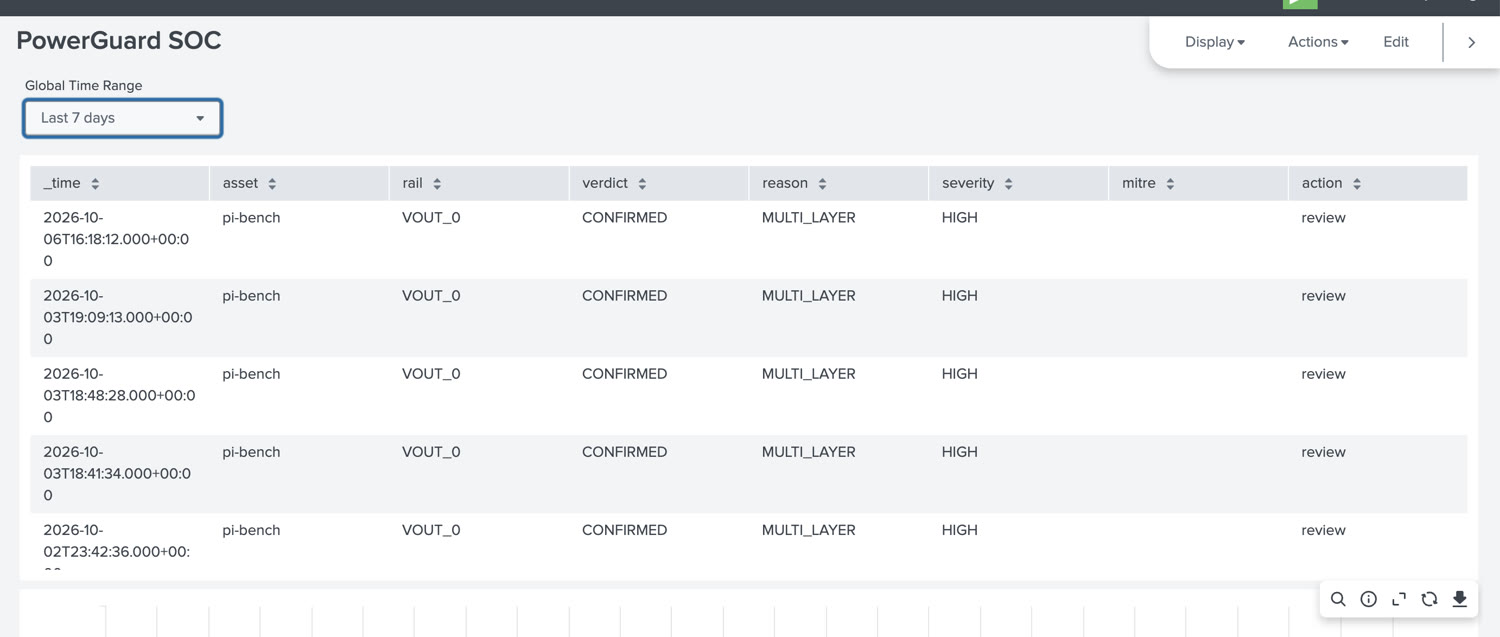
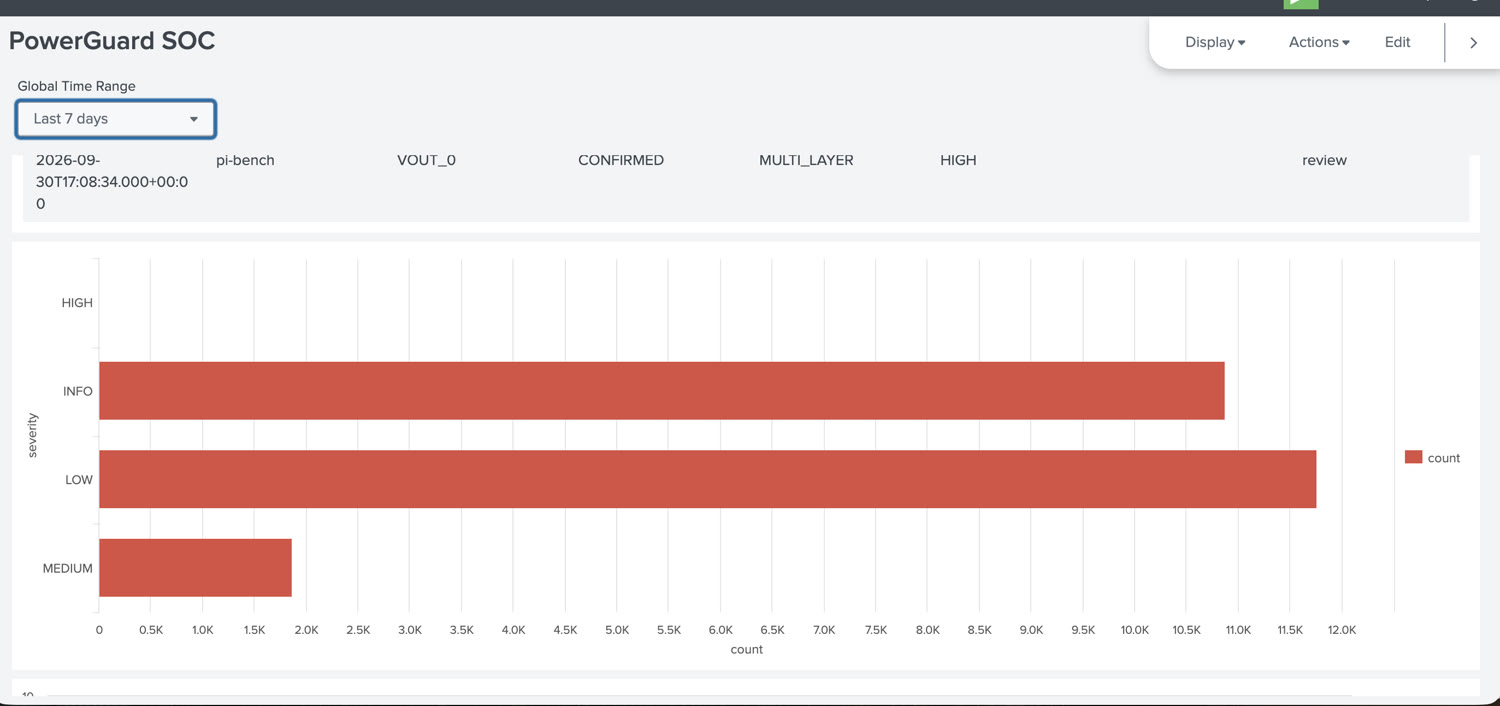
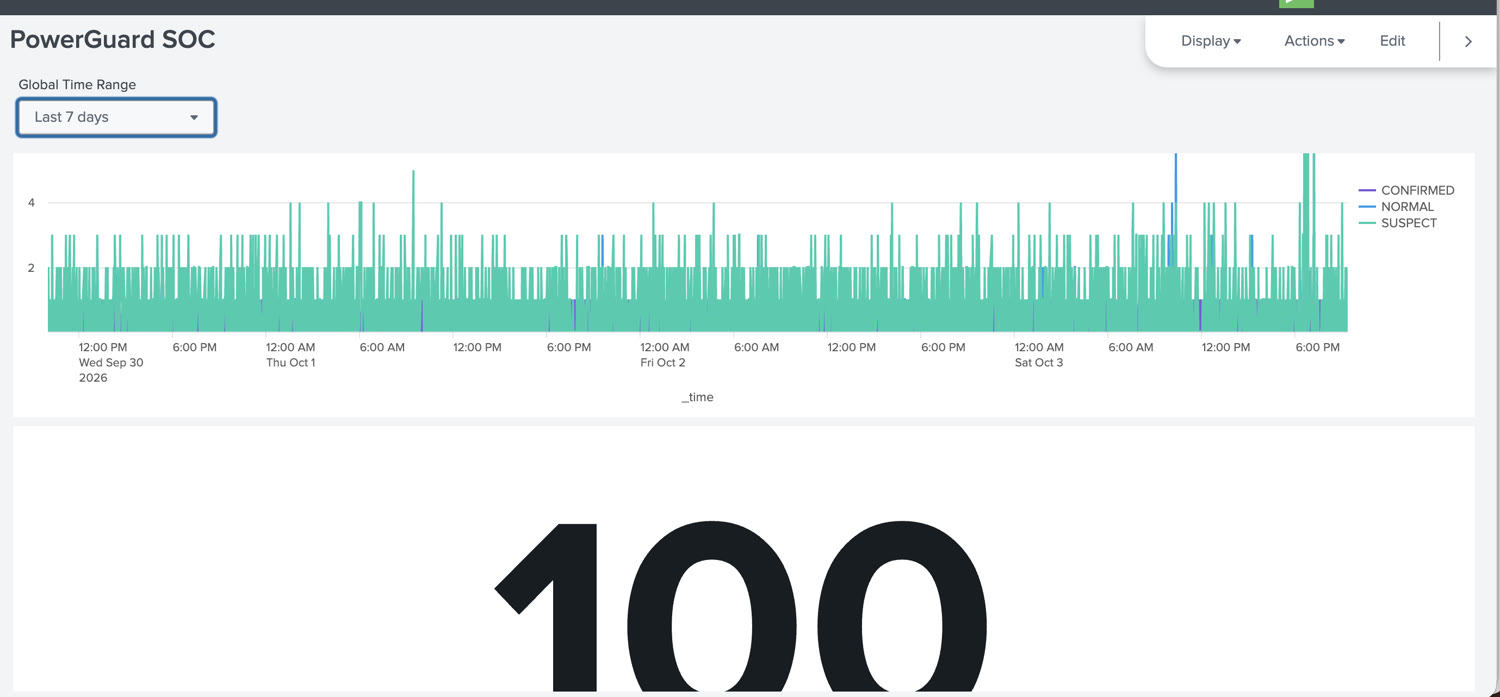
Real detections. Real dashboards.
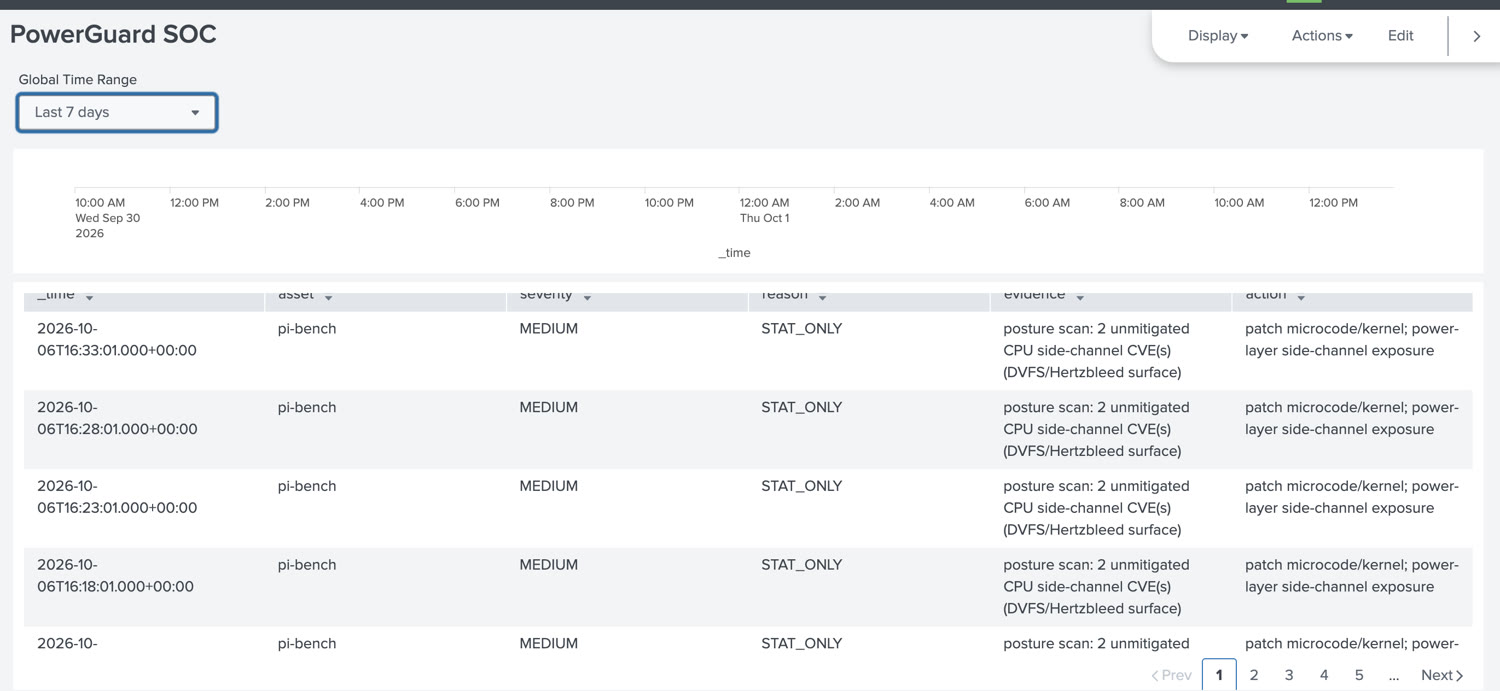
Running on our bench today, streamed into the tools your team already lives in. Verdicts, severity, timeline and posture, the same findings PowerGuard forwards into your SIEM.
A training run moves thousands of servers at once. An attack looks nothing like it.
Modern AI workloads swing power draw across a whole cluster in seconds, in step, dramatic, and entirely legitimate. An attack on the power layer moves differently: one controller, no scheduler behind it, a setpoint changed rather than a load answered. PowerGuard reads both from the same measurements and tells them apart from the physics.
The fleet moving as one
Coordinated swings seen across every affected server, not one graph at a time
The one that does not fit
A change no workload would produce, on hardware nothing asked to move
What the hardware actually experienced
Kept, and readable after the fact
Gartner projects worldwide data centre electricity consumption to double by 2030, with AI-optimized servers driving 64% of the increase. Source: Gartner, November 2025
In 2026, spending on inference ($23.3B) overtakes training ($19B) for the first time, as AI infrastructure shifts from periodic training runs to continuous real-time execution. Source: Gartner, August 2026
NVIDIA now ships power smoothing in the rack itself · GB300 NVL72 and Blackwell Ultra add energy storage and ramp shaping to cut peak draw by roughly 30%, and the Vera Rubin platform carries it forward. Source: NVIDIA, 2025–26 · Utility Dive, 2026
Continuous execution leaves no maintenance window. Smoothing shapes the load, it does not watch the controllers doing the shaping.
What we catch. What we don't claim.
THE SURFACE POWERGUARD COVERS
PMFault-class voltage manipulationVALIDATED LIVE
A live command driving a rail outside safe behaviour, detected from physical evidence in 20 ms on our own hardware.
Destructive setpoint and protocol abuseSAME DETECTION PATH
A setpoint changed rather than a load answered: one controller, no scheduler behind it, told apart from legitimate AI load by the physics.
Power hardware drifting toward failureIN VALIDATION
The same measurements show degradation before it takes a server down. Early-warning capability is being validated with design partners on production hardware.
NOT OUR LAYER · RUN IT ALONGSIDE
Firmware integrity & supply chainFIRMWARE-INTEGRITY TOOLS
“Is this the code we shipped” is a different question. PowerGuard reads how the layer behaves once running, not what was flashed onto it.
Network intrusion & lateral movementNDR / SIEM
PowerGuard is not a network monitor. It delivers its findings into the tools that are.
Workload-level attacksEDR / APPSEC
Everything above the operating system belongs to the stack you already run. PowerGuard covers the layer beneath it.
WHERE VALIDATION STANDS · STATED PLAINLY
The detection engine is bus-agnostic by design: validated on I²C, architected to detect identically on PMBus, and lab-validated on PMBus-class hardware in May 2026. We do not claim PowerGuard already runs on modern production VRMs, production PMBus hardening is current engineering work, and we will state it here when it is done.
Built on research the industry can check.
PMFault: Faulting and Bricking Server CPUs through Management Interfaces
The published attack class PowerGuard detects live on real hardware.
ARXIV · 2025Power Stabilization for AI Training Datacenters
NVIDIA, Microsoft & OpenAI on cluster-scale power swings, and the telemetry the control loops are missing.
US PROVISIONAL · FILED MAY 3, 2026Patent #64/055,940
Behavioural security for the power-controller layer, filed before public disclosure.